Laura Littlefair tells us about her experience teaching on this year’s Ming Chuan summer school
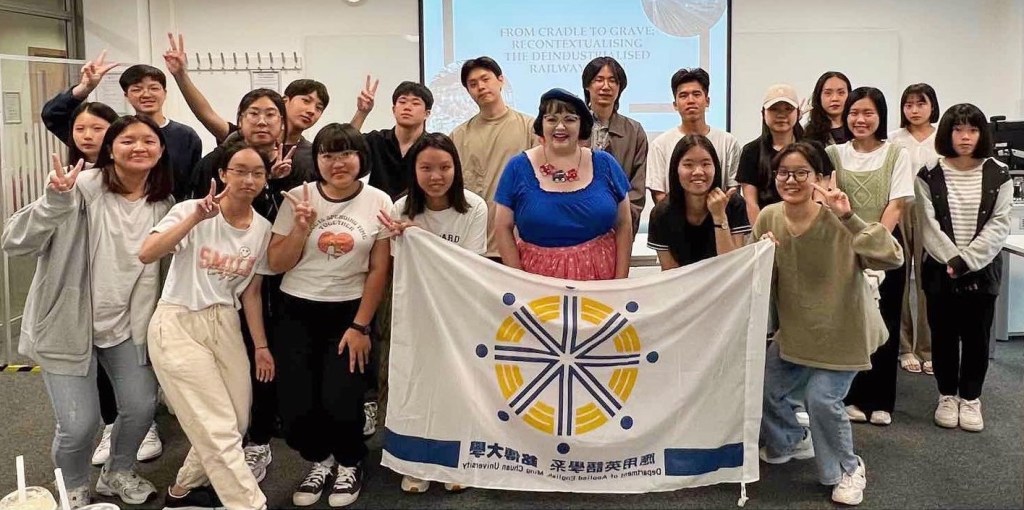
The first day of teaching is always a daunting one. Will my lecture be interesting? Have I got enough material to last the whole session? Will I be able to find the right room? Despite the myriad worries whizzing around my head, I really didn’t need to be concerned, as the students from Ming Chuan University in Taiwan put me at ease from the very beginning.
I was fortunate enough to lead two lectures on the Ming Chuan Humanities Cultural Programme, teaching students from the department of Applied English who had just completed their third year of study at the university. The partnership between Northumbria University and Ming Chuan University is a long-standing one, and for many years prior to the COVID-19 pandemic, Northumbria hosted their annual summer school. This was the first summer school since 2019, and being able to teach to a physical room of students was an incredibly engaging and enjoyable experience – a very different one to speaking to a swathe of black Zoom screens on a computer!
The first lecture I gave was based on my undergraduate dissertation, looking at how the railway poster as a genre in art and advertising explored the social and cultural impact of the railways in the 20th century. I taught the students about poster design in Belle Epoque France in the late 19th century that inspired many railway poster artists, through to pictorial railway posters in the 20th century and the big names in poster design during the ‘Golden Age’ from around 1923–1947. This was something of a whistle-stop tour of 20th century railway history, with plenty of eye-catching and vivid posters peppered throughout my lecture!
My second lecture centred around my current research, addressing deindustrialised communities that intersect with heritage institutions, and how local voices and groups are intrinsic to its history, heritage, and collective memory. The main case study is the North-Eastern town of Shildon, where my research will historicise engagement at three critical junctures in the town’s recent history: deindustrialisation in the 1980s; the opening of Locomotion railway museum in 2004; and the redefinition of this heritage’s value as part of the Stockton and Darlington Railway bicentenary (2025) and Locomotion’s Vision2025 redevelopment. As such, I took the students on a journey through early railway history, charting the course of the Stockton and Darlington Railway, and the importance of the Wagon Works in Shildon that began in 1826. Both lectures centred around my love of cultural and social railway history, providing the students with the opportunity to learn more about the railways in Britain, and their lasting influence upon art, advertising, museums, deindustrialisation, and nostalgia – a theme that runs through both research areas.
Before I began my PhD in October 2022, I was a museum professional, having been the Assistant Curator at Durham Castle Museum and the Museum of Archaeology at Durham University from 2019-2021. Prior to that, I completed my MA in Museum and Artefact Studies at Durham University, and over the course of my 2-year degree I worked part-time at both museums from 2017-1019. It should therefore come as no surprise that I adore museums, and the fascinating cultural experiences that can be gained from them. So, when the opportunity arose to accompany the students on a trip to Beamish: The Living Museum of the North, I hoped I would be able to share some knowledge about the rich history of the North East, and explore the new 1950s town with them.
When we first arrived, we took an open-top tram down into the 1900s Town, and then the students were able to explore the various areas of the museum at their own leisure over the course of the day. There’s a whole host of new attractions, such as the ongoing developments with the 1950s town, which now include Elizabeth’s Hairdressers, a Welfare Hall, Police Houses and Middleton’s Quality Fish and Chips – where several students and I enjoyed our lunch! I took a trip down the Mahogany Drift Mine in the 1900s Pit Village and Colliery with some of the students and staff, sporting some delightful bright green hard hats, which matched my beret of choice on the day too. I also travelled on the Pockerley Waggonway on a replica of a very early steam locomotive, Puffing Billy, which was obviously right up my street. Thankfully, it was a dry and sunny day, meaning I was able to enjoy the scenery of 1820s Pockerley as we chugged and jostled along the track, in a fourth class open-top carriage. Like many of the students, I rounded off the day with a visit to the gift shop, filled with an abundance of vintage-themed goodies and Beamish-branded items, including Christmas baubles, a tram driver teddy, and even Beamish monopoly!
The small part I played on the Ming Chuan Humanities Cultural Programme this summer has given me so much more than just a day out to a museum, or the opportunity to talk for 4 hours about railways. It gave me the confidence that I can teach students about my research, and that this is something I could actually do as a career after my PhD. It allowed me to experiment with different ways of presenting information, through posters, photographs, text and maps, seeing what worked well, and what wasn’t as engaging for students. At the end of my day of teaching, the students were extremely generous, and gave me a whole selection of gifts from the university to thank me for my lectures. I expected nothing from the students – other than the hope that they would enjoy my sessions – so this came as a genuine surprise, and one that will continue to remind me of my first teaching sessions and where it all began for many years to come.
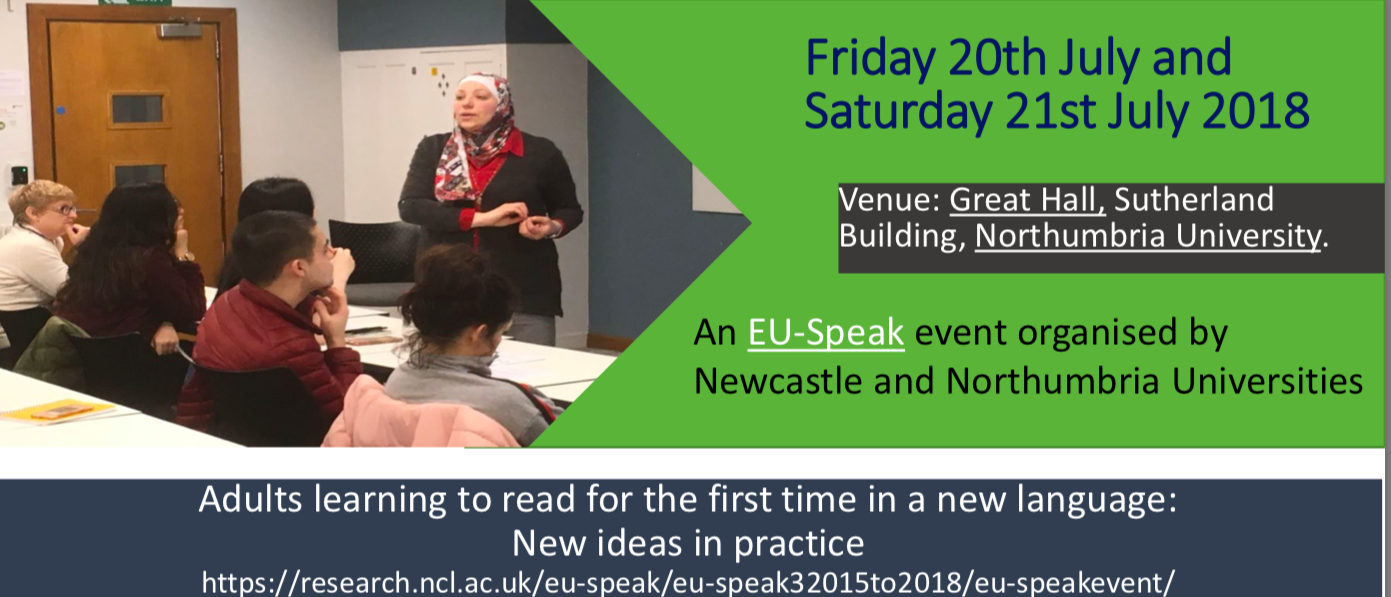
We are very much looking forward to hosting an important event at Northumbria on the 20th and 21st of July, in collaboration with colleagues at Newcastle University and a number of international partners.
The event, organised by the Eu-Speak Project, presents and explores new ideas for teaching adults to learn to read in a new language for the first time.
The EU-Speak Project is an eight-year project working to make a difference in the educational outcomes for immigrants with little or no education. It involves a number of international partners, including colleagues here at Northumbria and at Newcastle University. The project has already been very successful, developing a range of important findings and useful materials, and it continues to grow and to make significant progress, You can read about the project here
The event will include a wide range of workshops and hands-on activities.
Here are links where you can find out more and book a place:
It’s a busy week for Humanities colleagues at Northumbria. With assessment boards over, we’ve been reviewing the delivery of modules and programmes this academic year and preparing for next. There are lots of good things to celebrate, including lots of great achievements by students and staff, and we have lots of good ideas for next year.
Tomorrow, we have two important events happening on campus.
First, we are being visited by school subject leaders and teachers of English and History for our Building Bridges day. We will spend the day discussing some of of our teaching and other activities and exploring ways we can work together to develop resources and activities to support teaching and project work.
One focus of the day will, of course, be how things have changed recently, including the effects of GCSE and A Level reforms.
After that, Lynne Murphy will be giving the Northumbria Annual Linguistics Lecture, exploring differences between British and American English. Bookings for this quickly got close to our initial capacity so we adapted things so we can accommodate a bigger audience. It’s not too late to book a place:





 Northumbria Englishes